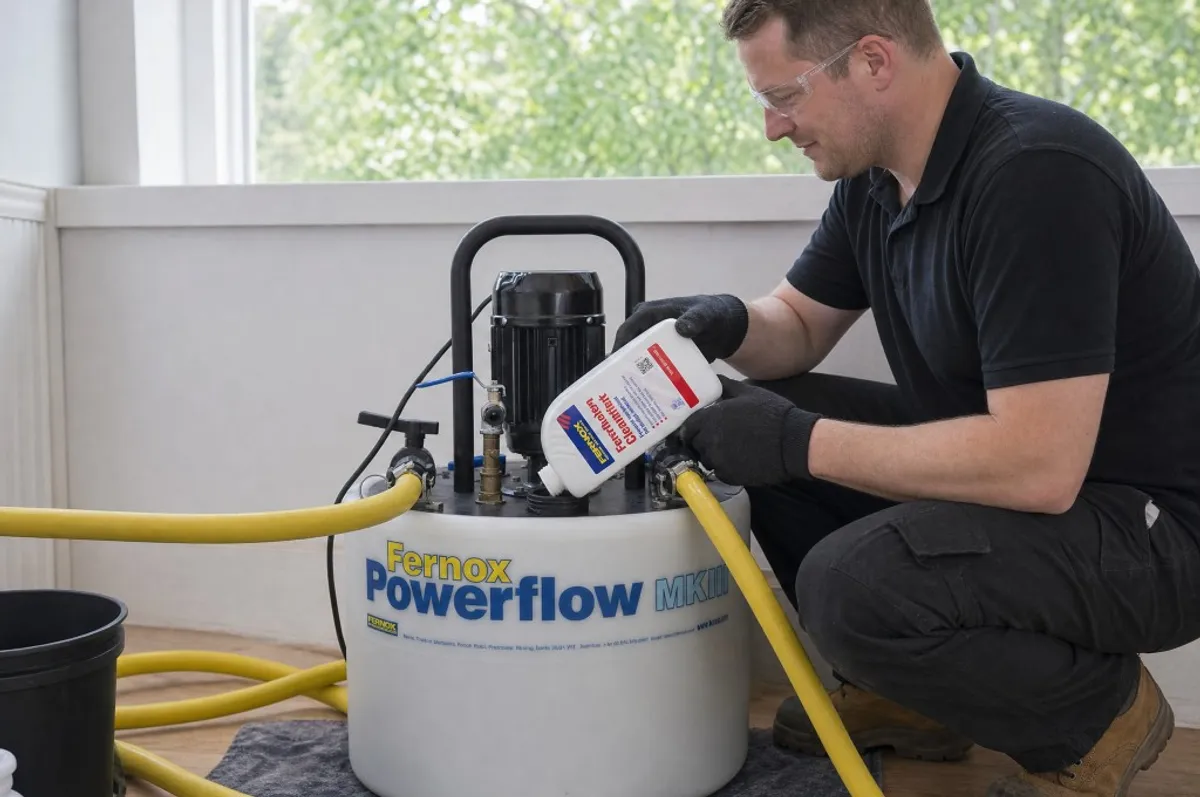
If your radiators are cold at the bottom, your boiler is kettling, or you have been quoted thousands for a new boiler, a power flush is often the most cost-effective fix. But prices in Northern Ireland vary wildly—and a vague “from £199” advert rarely tells the full story. This guide explains what you should actually expect to pay, what drives the price up or down, and how to spot a quote that will cost you more in the long run.
Typical power flush prices in NI (2025)
For a standard domestic central heating system in Northern Ireland, most homeowners pay between £350 and £650 for a full chemical power flush. That usually includes connecting a professional flush machine, circulating specialist chemicals, dumping contaminated water, refilling the system, and adding corrosion inhibitor.
- Set-up fee & chemicals: £150 per job, covering scheduling, the engineer's visit, the heavy-duty cleaner and corrosion inhibitor
- Per radiator: £40 each — so a typical 8-radiator home is £150 + (8 × £40) = £470
- Magnetic filter supply & fit (optional): £150 on top of the flush
- Annual boiler service (optional add-on): £80
At Heating Power Flush we use a transparent, fixed model: a £150 set-up fee and chemicals, then £40 per radiator, confirmed instantly in our online calculator before anyone visits your home. That removes the awkward “it depends” conversation on the doorstep.
What affects how much you pay?
1. Number of radiators
More radiators means more pipe volume, more water to treat, and longer machine runtime. A two-bed terrace in Belfast with six radiators is a very different job to a four-bed detached in Bangor with fourteen radiators and a cylinder coil.
2. Severity of sludge
If water runs black when you bleed radiators, or several radiators are stone cold, the system is heavily contaminated. Engineers may need multiple flush passes, stronger chemicals, or individual radiator removal to clear blocked tails—adding time and cost.
3. Boiler and system type
Combi boilers are usually straightforward to flush via the pump or a radiator circuit. Older system boilers with hot water cylinders involve more pipework. Microbore systems (10mm pipe common in 1980s installs) take longer because restrictions trap debris.
4. Access and property layout
Flats, terraced houses with no rear access, or boilers in awkward cupboards do not change the science of flushing—but they can add setup time. Always mention access issues when booking so the quote stays accurate.
What should be included in the price?
A proper power flush is not just “pumping water around for an hour.” Before you pay, confirm the quote includes:
- Full-system flush using a professional machine (not gravity drain only)
- Chemical cleaner appropriate for iron oxide / sludge
- Disposal of contaminated water
- System refill and bleed
- Corrosion inhibitor dosed to the correct level
- Basic before/after check on radiator temperatures
- Written or emailed confirmation of work carried out
Red flag quotes to avoid
Be wary of prices far below £300, quotes that do not mention inhibitor, engineers who refuse to give a breakdown, or anyone who recommends a flush without checking whether sludge is actually the problem. A cheap flush without inhibitor is money poured down the drain—literally.
Power flush vs a new boiler: the real saving
A new combi boiler in Northern Ireland often costs £1,800–£2,500 fitted. Many breakdowns blamed on “old boilers” are actually caused by sludge destroying the heat exchanger or blocking the pump. If your boiler is under 10 years old and otherwise sound, a £400–£550 flush plus a £150 magnetic filter can extend its life for years—far cheaper than premature replacement.
Is a power flush worth it on older systems?
Yes—if the boiler and radiators are structurally sound. We do not recommend flushing systems with known leaks, severely corroded radiators that are pin-holed, or boilers that have already been written off by a Gas Safe engineer. In borderline cases, a good engineer will pressure-test or inspect before flushing. That honesty saves you paying to flush a system that needs replacement instead.
How to get an accurate quote in under a minute
Gather three details: your postcode, number of radiators, and boiler type (combi, system, or regular). Enter them into our fixed-price calculator—you will see the exact price for your property with no hidden call-out fee. We serve Belfast, Greater Belfast, and towns across NI; if your postcode is covered, you can book there and then.
Frequently asked questions about cost
Do NI heating engineers charge a call-out fee on top?
Some do. Always ask whether the quoted price is all-in. Our online fixed quotes include labour and standard chemicals unless your system needs exceptional descaling—which we will explain before work starts.
Can I spread the cost?
Payment terms depend on the engineer attending. Many customers use the flush as preventative maintenance before winter rather than emergency spend—booking in summer can mean faster availability and avoiding peak-season surcharges from some firms.
Will it lower my gas bill?
A clean system transfers heat faster, so the boiler runs for shorter periods. Homeowners often report noticeably warmer radiators and modest bill reductions—especially if the system was previously running for hours to reach temperature. It is not a miracle cure, but removing sludge removes a major efficiency penalty.
Bottom line
Budget £350–£650 for most NI homes, insist on inhibitor included, and get the price fixed in writing before work starts. If you are in Belfast or anywhere across Northern Ireland, use our calculator for an instant figure tailored to your radiators.